😂 Meme Museum — Loading...
✦ Welcome to Oldweb Diary ✦ A digital museum of early internet culture ✦ 50+ memes with origin stories ✦ This Day in Internet History ✦ Lost Media Vault ✦ Memory Wall ✦ Retro Assets Library ✦ Best viewed in 800×600 ✦ Est. 2026 ✦ oldwebdiary.com ✦ AIM us if you have to ✦
A curated archive of the internet's most iconic memes — complete with origin stories, year of birth, and the cultural context that made them spread.

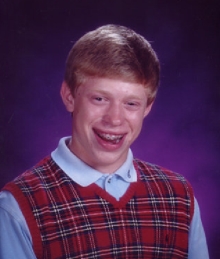
A yearbook photo of then-teenager Kyle Craven uploaded to Reddit in January 2012, showing him in a plaid vest with an unfortunate expression. The image was captioned with scenarios of spectacular misfortune and bad luck. Craven and the original poster Ian Davies were friends, and the photo was submitted to Reddit as a joke. Craven has since embraced his fame, making public appearances and YouTube content.

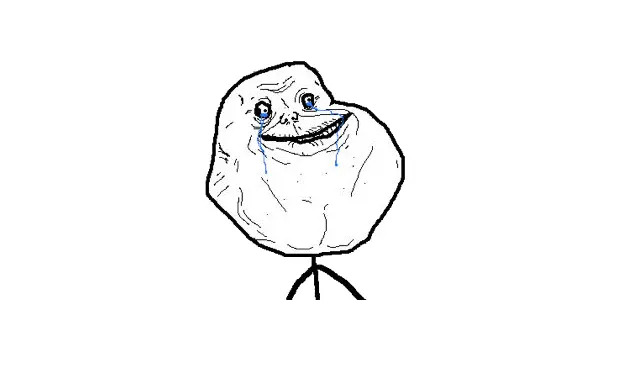
A rage comic face character originating from a 2010 FunnyJunk post depicting a stick figure crying and lamenting loneliness. The caption 'Forever Alone' resonated deeply with internet users and became a universal shorthand for expressing loneliness, social rejection, or doing things solo. It spawned the entire 'Forever Alone' subculture and remains one of the most recognized rage comic faces.

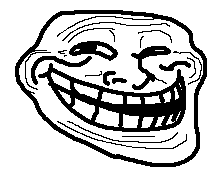
Drawn by Carlos Ramirez in Microsoft Paint in September 2008 and posted to DeviantArt to mock a fellow user. The smug grinning face quickly became the universal symbol for internet trolling and problem-causing. It spread across 4chan, Reddit, and YouTube comment sections for years. Ramirez later trademarked the image and successfully pursued copyright claims, earning significant income.
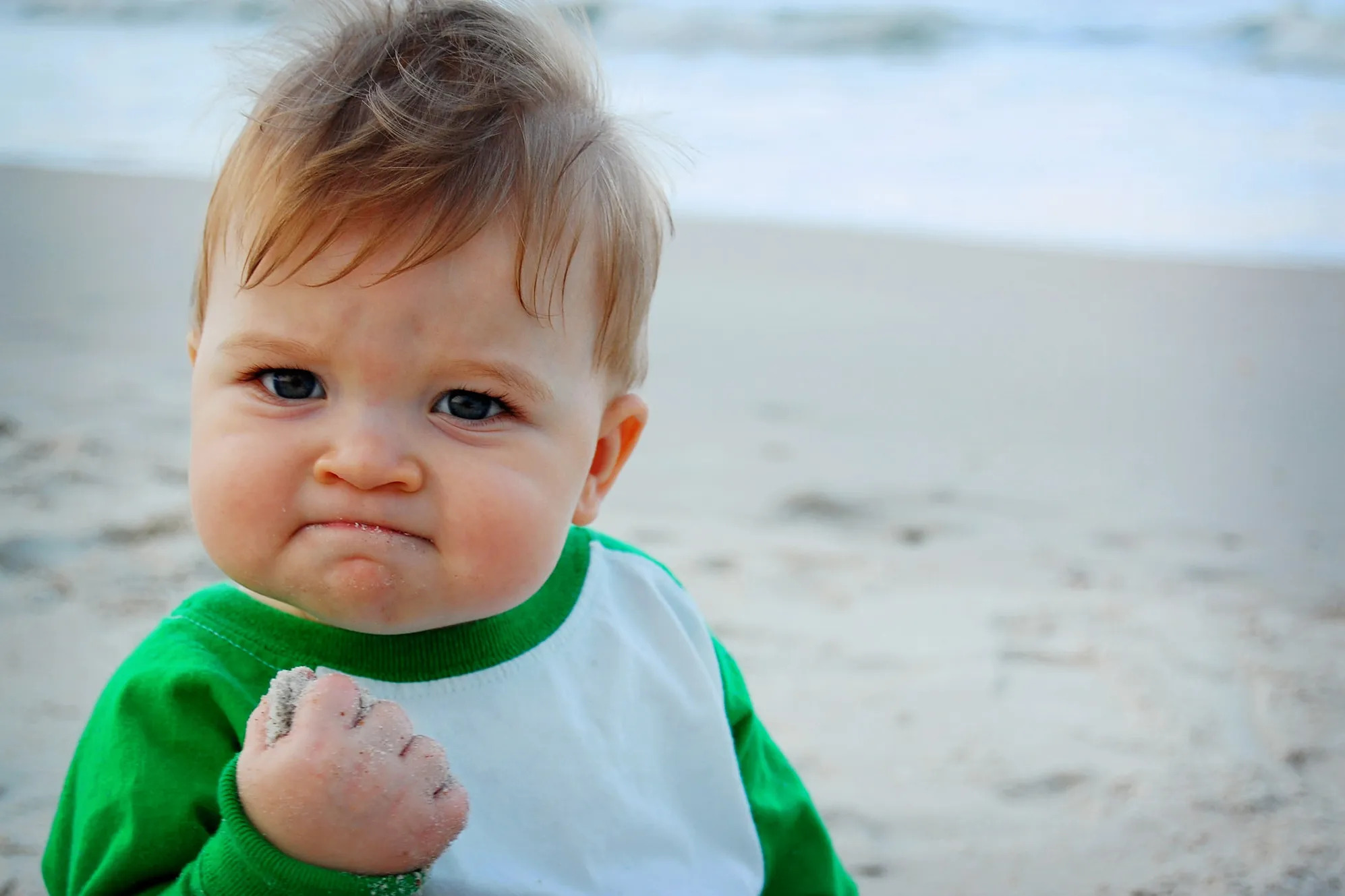
A photo taken by Laney Griner in 2007 of her then 11-month-old son Sammy at a beach, fist clenched in what looks like a determined gesture of triumph. Originally captioned 'I Hate Sandcastles' on Flickr, it was later rebranded as Success Kid and became one of the most widely used reaction images for expressing triumph or satisfaction. Griner successfully licensed the image and used its earnings to help pay for her husband's kidney transplant.

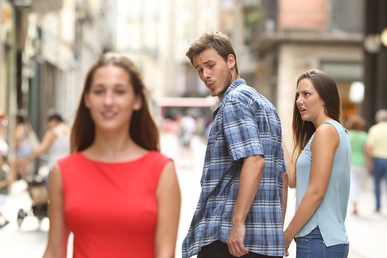
A stock photo taken by photographer Antonio Guillem in 2015 showing a man turning to look at a passing woman while his girlfriend looks on disapprovingly. Uploaded to Getty Images as part of a relationship series, it was discovered on Imgur in 2017 and became a universal template for showing divided attention. The original model, Mario Singarella, later revealed himself and commented on the meme's global reach.

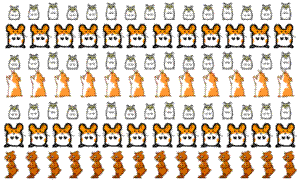
Created in 1998 by Canadian art student Deidre LaCarte as a fan page for her hamster Hampton Hamster. The page featured rows of animated GIF hamsters dancing to a sped-up sample of 'Whistle Stop' from the Robin Hood Disney soundtrack. It became one of the first viral websites of the internet era, inspiring a chart-topping novelty song in 2000 and being referenced in countless TV shows.

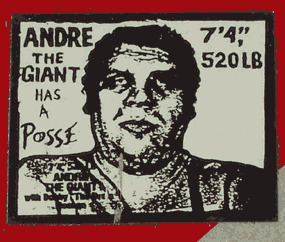
Created by Shepard Fairey in 1989 as a sticker campaign based on a newspaper ad featuring wrestler André the Giant. It spread through skateboarding and street-art communities and later evolved into the OBEY Giant campaign. It is widely treated as a pre-internet meme or proto-meme because it was copied, repeated, and remixed across public spaces.

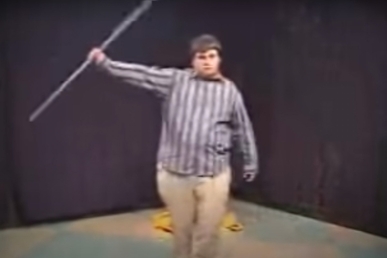
In 2002, 14-year-old Ghyslain Raza filmed himself swinging a golf ball retriever like a lightsaber in his school's studio. The tape was found by classmates and uploaded to Kazaa in 2003 without his permission. It became one of the first major viral videos, viewed hundreds of millions of times. Unfortunately Raza was bullied severely and his family sued the classmates. He later became a lawyer and advocate against cyberbullying.

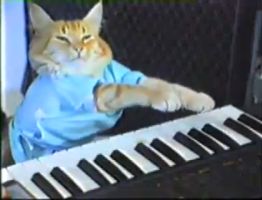
Originally filmed by Charlie Schmidt in 1984 — making it one of the oldest internet memes by original footage date. The video of his cat Fatso wearing a blue shirt and appearing to play a keyboard was uploaded to YouTube in 2007. It became a punchline format: a fail video would play, then cut to Keyboard Cat as if to say 'play him off'. Schmidt's cat Fatso passed away before the video went viral, but he adopted a new cat and continued the tradition.

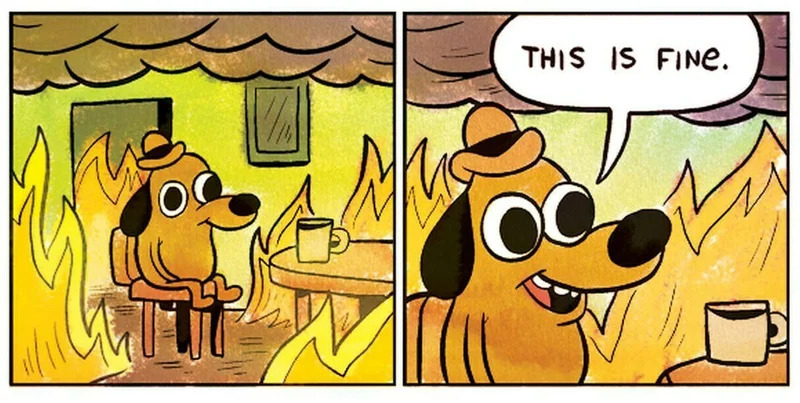
From a 2013 webcomic strip by KC Green called 'On Fire'. The strip shows a dog sitting calmly in a burning room saying 'This is fine'. The first two panels became one of the most universally shared reaction images on the internet, used to express resigned acceptance of a terrible situation. It surged in popularity during politically turbulent periods and remains one of the most enduring meme formats.

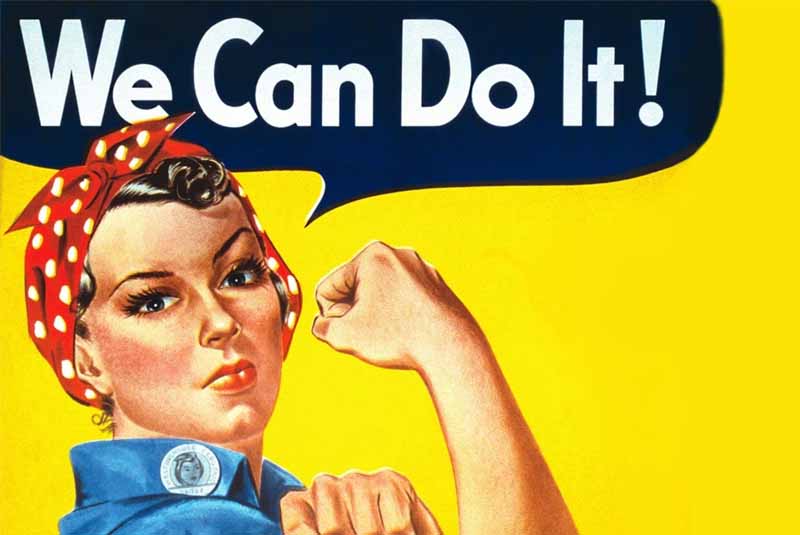
The 'We Can Do It!' image from 1943 became a long-lasting cultural symbol of women workers and empowerment. The image was reused and repurposed many times, which is a core feature of meme-like spread.

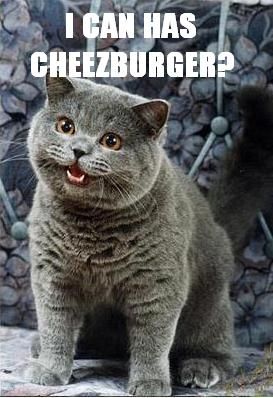
The I Can Has Cheezburger meme began in January 2007 when Eric Nakagawa posted a photo of a large British Shorthair cat with the caption 'I CAN HAS CHEEZBURGER?' The image spawned an entire genre of cat macros using deliberately bad grammar — lolspeak. The website icanhascheezburger.com became one of the most visited sites in the world in 2007 and spawned an entire media company.